
The More the Algorithm Understands You, the More Empty Your Life Begins to Feel
We built machines to predict human desire—then slowly became predictable enough to disappear inside them.

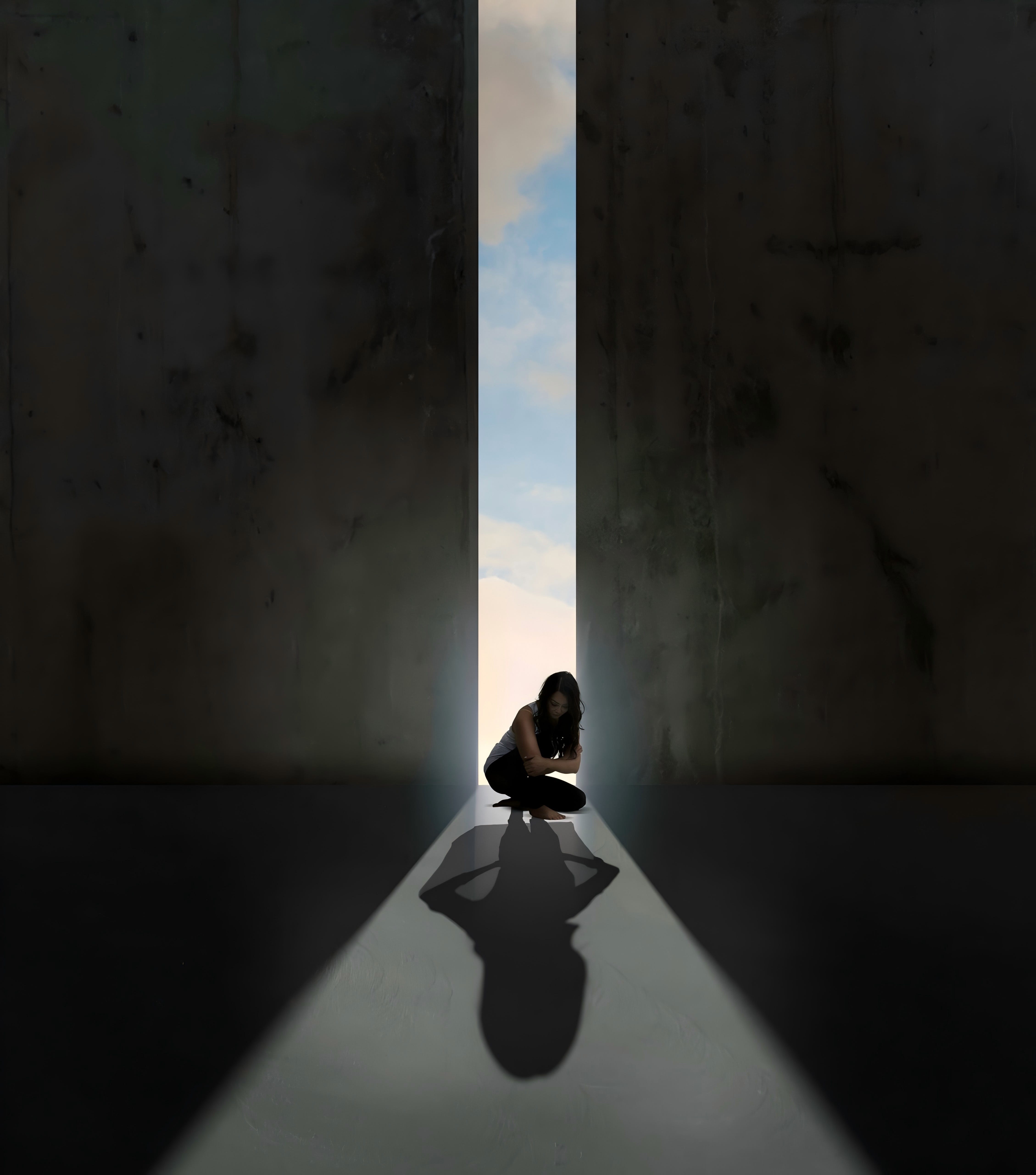
There was a time when boredom still existed.
You could sit in silence without immediately reaching for stimulation.
You could walk for an hour without documenting it.
You could feel sadness without translating it into content.
You could wonder who you were without an algorithm instantly trying to answer for you.
That world is gone.
Today, before you even know what you want, your phone already does.
It knows what will make you stop scrolling.
It knows what face will keep your attention for 1.7 more seconds.
It knows which headline will trigger your anxiety, loneliness, outrage, lust, insecurity, or curiosity with terrifying precision.
And the most disturbing part is this:
It works.
Not because the algorithm is intelligent.
But because human beings are becoming frighteningly easy to predict.
Most people think technology is making life more convenient.
That is the surface illusion.
What it is actually doing is removing the friction that once gave human existence emotional depth.
The algorithm does not want you fulfilled.
Fulfilled people stop scrolling.
It wants you slightly restless.
Slightly incomplete.
Slightly uncertain about yourself.
Enough emptiness to keep consuming.
Never enough pain to fully wake up.
So modern life becomes a strange psychological limbo:
you are constantly stimulated, but rarely moved.
You consume thousands of emotions per day without deeply feeling any of them.
A clip.
A tragedy.
A joke.
A breakup.
A war.
A motivational speech.
A thirst trap.
A catastrophe.
All within ninety seconds.
The nervous system was never designed for this.
Human beings evolved to emotionally process reality slowly.
Now reality arrives as an infinite stream of fragmented psychological shocks.
And after years of this, something terrifying begins to happen:
You no longer know which desires are actually yours.
This is the hidden horror of algorithmic life.
People think surveillance is the danger.
No.
The deeper danger is psychological outsourcing.
The algorithm is slowly replacing the painful process of forming an identity.
It tells you what to admire.
What to fear.
What to desire.
What success looks like.
What attractiveness looks like.
What outrage you should participate in today.
What kind of life is “worth” living.
At first, this feels comforting.
Choice is exhausting.
Freedom is overwhelming.
Uncertainty hurts.
So the modern mind quietly makes a bargain:
“Tell me who to become, and I will give you my attention forever.”
Most people never realize they made this trade.
But you can see the consequences everywhere.
Millions of people developing identical personalities.
Identical opinions.
Identical aesthetics.
Identical ambitions.
Identical emotional reactions.
Individuality slowly dissolves into optimized sameness.
People no longer discover themselves.
They assemble themselves from recommended fragments.
This is why so many people feel emotionally numb despite constant stimulation.
The human psyche needs resistance to feel alive.
But algorithms are removing resistance from existence itself.
Music is recommended before curiosity appears.
Entertainment arrives before silence can deepen.
Romantic validation appears before loneliness can mature into self-understanding.
Even suffering is interrupted before it can transform you.
The modern person rarely sits long enough with discomfort to extract wisdom from it.
Every unpleasant feeling is instantly anesthetized:
scrolling,
streaming,
shopping,
dopamine,
noise.
And slowly, without realizing it, people lose the ability to encounter themselves.
That is the real crisis.
Not distraction.
Self-alienation.
The philosopher Friedrich Nietzsche once warned that human beings would eventually seek comfort so obsessively that they would become incapable of greatness.
He feared a future where people avoided struggle, uncertainty, solitude, and existential tension at all costs.
A future where humanity no longer truly lived—only consumed comfort while waiting to die.
He called this figure “the Last Man.”
And if he saw modern algorithmic culture, he would probably recognize it instantly.
Because the Last Man is not evil.
The Last Man is merely overstimulated, emotionally exhausted, and spiritually sedated.
He no longer asks:
“What is true?”
“What is meaningful?”
“What must I become?”
He asks only:
“What will distract me next?”
But here is the cruel paradox nobody wants to admit:
The algorithm understands you partly because you have become repetitive.
Most people live inside loops.
Same fears.
Same cravings.
Same insecurities.
Same emotional triggers.
The machine studies repetition because repetition is profitable.
And the more predictable you become, the easier you are to emotionally engineer.
That is why modern platforms often feel strangely intimate.
Sometimes your feed seems to know your loneliness before your friends do.
But this intimacy is hollow.
The algorithm does not understand your soul.
It understands your patterns.
And human beings mistake recognition for meaning all the time.
This is why so many people feel exhausted after hours online.
Not because they consumed “too much information.”
Because deep down, they can feel themselves disappearing.
A person cannot endlessly absorb the desires, fears, opinions, aesthetics, and emotional rhythms of millions of strangers without eventually losing contact with their own interior world.
And once that interior world weakens, silence becomes terrifying.
Many people today are not afraid of being alone.
They are afraid of encountering what remains of themselves when the stimulation stops.
So they keep scrolling.
Not for pleasure.
For avoidance.
And yet…
Something strange is happening beneath all this noise.
A growing number of people are beginning to feel the emptiness.
Not dramatically.
Not all at once.
But quietly.
They are starting to suspect that constant stimulation is not the same as living.
That optimization is not meaning.
That visibility is not intimacy.
That being endlessly perceived is not the same thing as being understood.
Some are deleting apps.
Some are disappearing from social media.
Some are reclaiming boredom like a forbidden spiritual practice.
Because they are beginning to realize something terrifying:
The algorithm can predict almost everything about you except the person you become when you finally disconnect from it.
And maybe that is why silence feels so uncomfortable now.
Silence is where unpredictability returns.
Silence is where identity stops being performed.
Silence is where you encounter the parts of yourself no system can monetize.
Perhaps the future’s greatest act of rebellion will not be loud.
It will not be political.
It will not be aesthetic.
It will not even be visible.
It will simply be a human being reclaiming ownership over their own attention.
Choosing depth over stimulation.
Presence over performance.
Solitude over endless psychological noise.
In an age where algorithms increasingly shape reality itself, inner stillness may become one of the last places left untouched.
And that may be why it feels so difficult to reach.
Because the moment you stop feeding the machine, you begin hearing yourself again.
And after years of algorithmic noise—
that voice can sound almost unbearable.
Because it is not optimized.
Not curated.
Not filtered for engagement.
It is simply you.
Unedited.
And in a world where everything is designed to keep you externally stimulated, that may be the most radical experience left.
If this kind of writing resonates with you—if you’re interested in exploring the psychological, philosophical, and cultural forces shaping modern life in deeper, less comfortable ways—you can support my work by becoming a paid subscriber.
Paid subscribers receive extended essays, deeper psychological breakdowns, and early access to upcoming pieces that push further into the hidden architecture of modern consciousness.
Subscribe if you want to go beyond the feed.